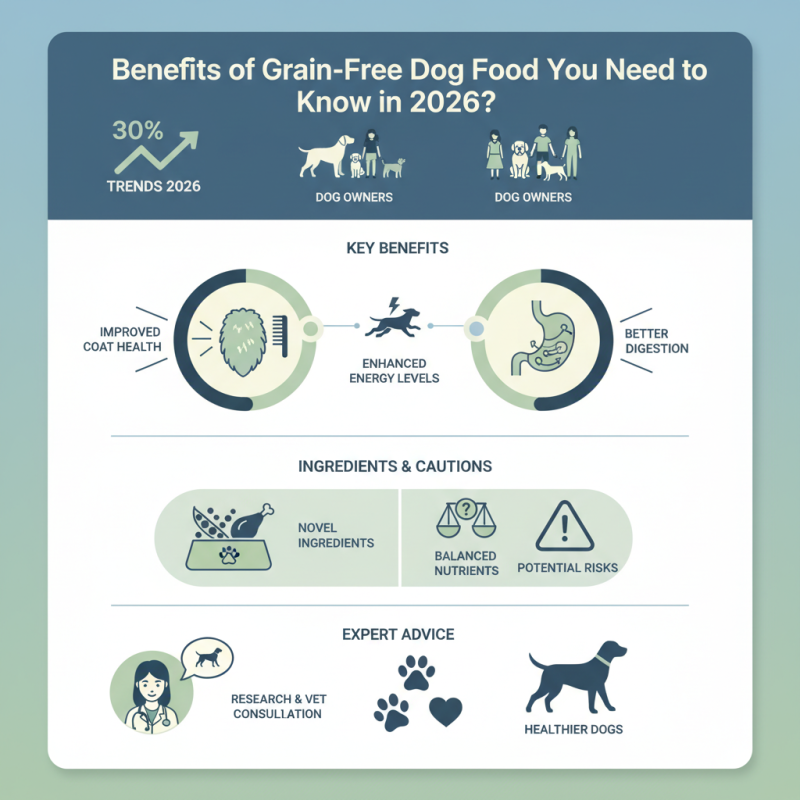
In 2026, dog owners increasingly turn to grain-free dog food to meet their pets' dietary needs. The American Kennel Club reports that about 30% of dog owners prefer grain-free options. This shift reflects concerns over grain allergies and the demand for high protein diets. As noted by Dr. Sarah Hartwell, a veterinary nutritionist, “what are the benefits of grain-free dog food? It often leads to improved coat health and digestion.”
Many dogs benefit from grain-free diets, particularly those with sensitivities. Grain-free formulas tend to use novel ingredients, like peas and lentils, which can help minimize allergic reactions. A study published in the Journal of Animal Science highlights that grain-free diets can enhance energy levels in pets. However, experts caution about maintaining a balanced intake of nutrients. Over-reliance on high protein can cause health issues.
Pet owners must research and consult veterinarians before changing diets. Each dog is unique, and what works for one might not suit another. A grain-free diet could lead to healthier dogs when done correctly. Yet, the potential risks should not be ignored. The choice of food should involve careful consideration and expert input to ensure a pet's well-being.
Grain-free dog food has gained immense popularity among pet owners, particularly in 2026. This trend stems from a growing concern over allergies and digestive issues in dogs. Studies from the Veterinary Nutrition Society indicate that nearly 20% of dogs may have food sensitivities. Grain-free diets offer alternative protein sources and reduce potential allergens.
It's important to note that removing grains does not automatically guarantee better health. Some dogs may benefit from moderate grain inclusion. In fact, a 2020 study published in the Journal of Animal Science revealed that not all grain-free diets meet nutritional adequacy, highlighting the need for balanced formulations.
Tip: Consult with a veterinarian before making significant dietary changes for your dog. Tailored advice can address individual health needs.
When switching to grain-free food, monitor your dog's weight and energy levels. Changes can take time, and not all pets respond positively. Observing your dog's reactions can help refine their diet. A study by the American Kennel Club found that owners who kept records about their dogs' health saw improvements in overall well-being. This emphasis on individual needs supports the idea that one diet does not fit all.
A grain-free diet can offer numerous nutritional benefits for dogs. Many pet owners choose this type of food to reduce potential allergens. Grains can sometimes lead to digestive distress or skin reactions in sensitive dogs. Without grains, many high-quality options focus on protein from meat, fish, and vegetables. This can support muscle health and overall well-being.
When transitioning to a grain-free diet, it’s essential to do so gradually. This helps prevent gastrointestinal upset. Start by mixing small amounts of the new food with their current diet. Over a week, slowly increase the new food while decreasing the old. Keep an eye on your dog’s reaction to the change. Not every dog will thrive on a grain-free diet.
Consider consulting with a veterinarian. They can provide insights on whether a grain-free diet is suitable for your dog. Monitoring your dog's health and body condition is vital. Some dogs may actually do better with a balanced diet that includes grains. Understanding your dog's unique needs is the first step in choosing the right food.
Many dog owners believe that grain-free dog food is the best choice for their pets. However, there are some common misconceptions surrounding this trending diet. One such belief is that all dogs thrive on grain-free options. In reality, not all dogs need to avoid grains. Some dogs can digest grains just fine and may benefit from the nutrients they provide.
Another misconception is that grain-free foods guarantee better health. Some studies suggest that grain-free diets may be linked to specific health issues. For instance, certain grain-free options lack essential nutrients. This can lead to imbalances in a pet's diet. Understanding your dog's specific needs is key in making informed choices.
**Tip:** Consult with a veterinarian before switching your dog's diet. They can recommend the best food based on health and lifestyle.
Additionally, it's important to read labels carefully. Some grain-free products are high in fat or calories. A high-fat diet might lead to weight gain. Keep your dog’s overall health in mind.
**Tip:** Monitor your dog’s weight regularly and adjust their portion sizes accordingly. This will help avoid potential health issues while ensuring balanced nutrition.
Switching to grain-free dog food can have notable health benefits, but it’s essential to consider individual needs. Some dogs may experience improved digestion on a grain-free diet. They might show increased energy levels as a result of a high-protein diet. Ingredients like sweet potatoes and peas can provide necessary nutrients. Dogs with grain allergies often find relief by eliminating wheat and corn.
However, a grain-free diet isn’t suitable for all dogs. Some pets may miss out on vital nutrients found in whole grains. These grains can provide fiber, aiding digestion in certain dogs. It's crucial to observe your pet's response when changing their diet. Monitor for any changes in energy, coat quality, or digestive health. Regular vet check-ups can help assess if the new diet suits your furry friend.
Consulting with a veterinarian before making this transition is advisable. They can offer tailored advice based on your dog's specific health needs and condition. Each dog reacts differently. Finding the right balance is essential, and ongoing evaluation is key to ensuring a beneficial dietary change.
| Benefit | Description | Nutritional Value | Considerations |
|---|---|---|---|
| Improved Digestion | Grain-free diets can reduce gastrointestinal issues. | Higher in protein, lower in carbohydrates. | Monitor for allergies. |
| Increased Energy | Many dogs experience higher energy levels with grain-free diets. | Potato and sweet potato as energy sources. | Gradual transition is recommended. |
| Healthier Coat | Improved skin and coat condition due to better fatty acid intake. | Rich in Omega-3 and Omega-6. | Monitor for skin reactions. |
| Weight Management | Helps maintain a healthy weight, especially in less active dogs. | High protein to fat ratio. | Ensure portion control. |
| Reduced Allergens | May help with dogs that have grain allergies or sensitivities. | Alternative sources of carbohydrates. | Consult with a vet for allergy testing. |
The demand for grain-free dog food is growing. A study in 2025 showed that over 30% of American dog owners prefer grain-free diets. This trend is fueled by health concerns among pet owners. Many believe that these diets can help with allergies and digestive issues. This belief has led to a boom in innovative ingredients, such as lentils and peas.
In 2026, grain-free solutions are expected to become even more advanced. Companies are investing in research to create balanced, nutritional options without grains. The Association of American Feed Control Officials reported that pet food formulations could focus more on sustainability. This shift includes using eco-friendly sources and ensuring a higher protein quality.
However, challenges remain. Experts caution that grain-free diets aren’t suitable for all dogs. Some may require grains for proper digestion and energy. Pet owners should be educated about their pets' specific dietary needs. The future of grain-free dog food will hinge not only on trends but also on informed choices.
This chart illustrates the various benefits of grain-free dog food anticipated in 2026. The percentage indicates the proportion of dog owners who find each benefit significant. Improved digestion is projected to be the most recognized benefit, followed by relief from allergies and increased energy levels.
: Grain-free dog food does not include common grains like wheat or corn. It focuses on alternative protein sources.
Concerns about dog allergies and digestive issues have driven interest in grain-free diets among pet owners.
No, some dogs may actually require grains for proper digestion and nutrition. Each dog's needs vary significantly.
Observe changes in your dog’s weight, energy levels, and overall health during the transition.
Not always. Some grain-free diets may lack vital nutrients found in whole grains required for some dogs.
Yes, a veterinarian can provide personalized advice tailored to your dog's unique health needs and conditions.
Ingredients like lentils, peas, and sweet potatoes are popular for their nutritional benefits in grain-free formulas.
Look for improvements in energy, coat quality, and digestion over time. Regular vet check-ups also help assess the diet's effectiveness.
Innovations focusing on sustainability and higher protein quality are anticipated, alongside a greater emphasis on pet education.
Yes, not all dogs thrive on grain-free diets, and pet owners need to understand their individual dog's dietary requirements.
As the popularity of grain-free dog food continues to rise, many pet owners are curious about what are the benefits of grain-free dog food. This dietary choice offers several nutritional advantages, including higher protein levels and a reduction in potential allergens, which may contribute to better overall health for some dogs. However, it's essential to be informed about common misconceptions, such as the idea that all dogs should be on a grain-free diet, as individual needs can vary greatly.
When considering a switch to grain-free options, pet owners should also be aware of potential health implications and consult with their veterinarians. The future of grain-free dog food solutions seems promising, with ongoing research and development focused on enhancing nutritional value and addressing dietary needs. Understanding these aspects can help ensure that dog owners make the best choices for their furry companions.

Zesty Pet