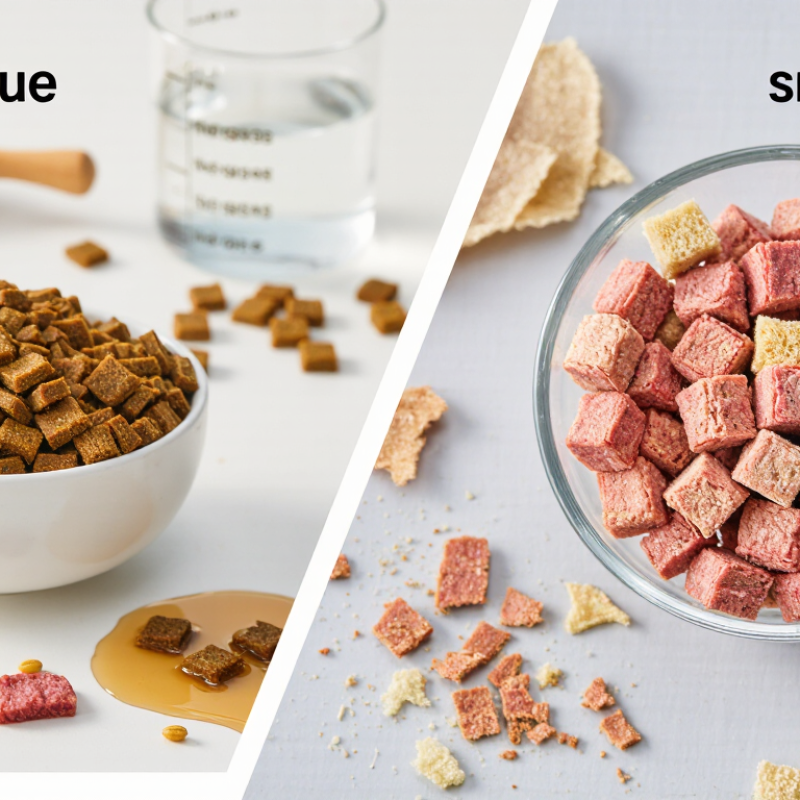
| Primary Preservation Method |
Warm air removes moisture, usually at controlled temperatures. |
Food is frozen and then dried under low pressure, allowing ice to sublimate. |
Freeze-drying generally exposes ingredients to less heat, while dehydration is typically simpler and more economical. |
| Typical Moisture Content Before Rehydration |
Approximately 5%–10%, depending on the recipe and drying process. |
Approximately 2%–5%, depending on the ingredients and packaging. |
Both formats are concentrated and should be stored dry. Exact moisture levels must be confirmed on the product specification. |
| Calorie Density by Weight |
High on an as-fed basis because most water has been removed. |
Very high on an as-fed basis because even more moisture is removed. |
Portions should be measured carefully. Compare calories per gram or per cup rather than serving volume alone. |
| Protein Concentration |
Protein becomes concentrated after water removal; the final level depends mainly on the recipe. |
Protein is also concentrated, with less heat exposure potentially helping preserve protein quality. |
Processing alone does not determine protein adequacy. Check the guaranteed analysis and the ingredient formulation. |
| Fat Stability |
Heat and oxygen exposure can accelerate fat oxidation if processing or packaging is inadequate. |
Low-temperature drying can help protect fats, but oxidation can still occur after drying. |
Look for oxygen-barrier packaging, appropriate storage, and a clear best-before date. |
| Vitamin Retention |
Some heat-sensitive vitamins may decrease during warm-air drying; manufacturers may compensate through formulation. |
Often better preserves heat-sensitive nutrients because the product is processed at low temperatures, although losses can still occur. |
A complete and balanced nutritional formulation matters more than the drying method alone. |
| Mineral Retention |
Minerals are generally stable during drying, but their concentration increases as water is removed. |
Minerals are generally stable and become concentrated in the finished product. |
Excessive mineral intake can be problematic for some pets, so use feeding guidance from a veterinary professional when needed. |
| Digestibility |
Can be highly digestible when made from well-cooked, properly formulated ingredients. |
Can retain ingredient structure and flavor, but digestibility still depends on the recipe, particle size, and the individual pet. |
There is no universal digestibility advantage; ingredient quality and formulation should be evaluated first. |
| Rehydration Requirement |
Usually benefits from added warm water before feeding. |
Can be fed dry or rehydrated, depending on the product instructions. |
Adding water increases meal moisture and may support pets that do not drink enough, but rehydrated food should be handled promptly. |
| Food Safety Considerations |
Drying reduces water activity but does not automatically eliminate all pathogens. |
Freeze-drying reduces moisture but does not reliably kill every pathogen, especially in raw formulations. |
Follow handling instructions, wash hands and bowls, and use extra caution with raw or minimally processed recipes. |
| Flavor and Aroma |
Usually retains good flavor, although heat may alter some aromas and flavors. |
Often retains more of the original aroma, color, and flavor because of low-temperature processing. |
Either format may improve acceptance for selective eaters, but preferences vary by pet. |
| Storage Life After Opening |
Often remains stable for weeks when tightly sealed and kept cool and dry. |
Often remains stable for weeks when protected from moisture and oxygen. |
Shelf life varies by packaging and formulation. Reseal the package immediately after each use. |
| Water Activity |
Low water activity helps limit microbial growth when the product is properly dried. |
Very low water activity helps improve storage stability, provided the product remains dry. |
Water activity is not the same as moisture percentage; both should be controlled through validated manufacturing and packaging. |
| Typical Cost Position |
Generally less expensive to produce than freeze-dried food. |
Generally more expensive because freeze-drying requires specialized equipment and longer processing times. |
Compare the cost per day or per 1,000 kcal rather than the package price alone. |
| Best Selection Criteria |
Choose a complete and balanced recipe with validated processing, clear feeding instructions, and suitable ingredients. |
Choose a complete and balanced recipe with reliable pathogen controls, suitable ingredients, and clear rehydration guidance. |
The better option depends on the pet’s health, age, dietary needs, budget, and tolerance—not simply the preservation technology. |
 Zesty Pet