A dog that inhales dinner can leave an empty bowl in seconds—and a worried owner listening for coughing, gagging, or vomiting. Learning how to stop a dog from eating too fast starts with understanding both the habit and its risks. Fast eating can lead to choking or regurgitation, and it may contribute to concern about gastric dilatation-volvulus, commonly called bloat. But speed is not the whole story. Breed, body shape, age, and other factors matter.
Research offers useful context. A peer-reviewed study in the Journal of the American Veterinary Medical Association examined 1,637 large- and giant-breed dogs and identified rapid eating among factors associated with bloat risk (Glickman et al., 2000). This does not mean every fast eater will develop bloat. It does mean owners should take the pattern seriously, especially with deep-chested dogs. Dr. Jerry Klein, chief veterinary officer of the American Kennel Club, emphasizes recognizing bloat warning signs and seeking urgent veterinary care when they appear. The practical takeaway is simple: slow meals safely, and do not treat sudden distress as a feeding quirk. Some dogs need more than a new bowl.
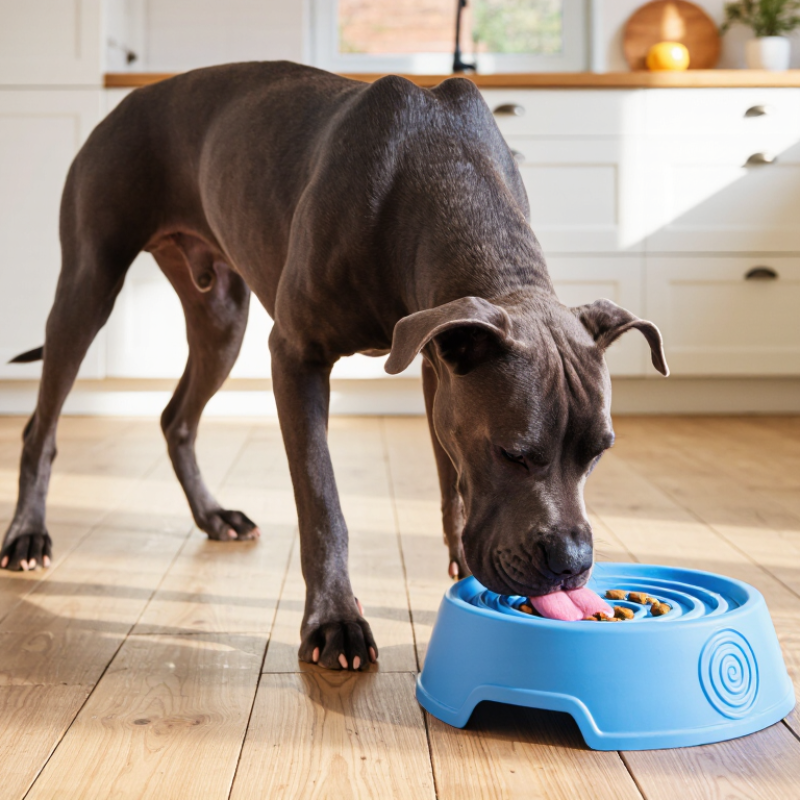
A maze-style slow feeder, food puzzle, or several small portions can make a meal last longer. Watch your dog eat. Notice whether they gulp, cough, or seem uncomfortable. If rapid eating continues, or symptoms appear, ask your veterinarian for advice tailored to your dog. A bowl is a tool, not a diagnosis.
A dog may gulp dinner because eating quickly once helped it keep food. This can happen in homes with several pets, where another animal watches nearby or approaches the bowl. Even if meals are now served separately, that old urgency may remain. Some dogs have learned that food disappears fast.
Excitement can also speed things up. A dog may spin, whine, and swallow eagerly when the bowl hits the floor. Long gaps between meals or a sudden change in appetite may contribute, too. Some dogs simply have strong food motivation. It varies.
Look at the pattern, not just one meal. Does your dog rush only when another pet is close, or every time? A sudden increase in hunger, weight loss, vomiting, or changes in drinking deserves a veterinary check. Parasites and other health problems can affect appetite. Fast eating alone does not identify a medical cause, and it is easy to assume the dog is merely greedy. That may be wrong. Notice the setting, pace, and any new symptoms; those details can help explain what is driving the behavior.
| Possible reason | What you may notice | Practical steps | When to contact a veterinarian |
|---|---|---|---|
| Competition or past food insecurity | Your dog rushes meals around other pets, guards the bowl, or eats faster when animals are nearby. | Feed pets in separate rooms or behind a closed door. Give each dog enough space and avoid taking food away while they eat. | Ask for veterinary or qualified behavior support if there is growling, snapping, or other guarding behavior. |
| Excitement or a strong appetite | Your dog appears eager at mealtimes and swallows food with little chewing, but otherwise seems well. | Keep mealtimes calm and predictable. Try a veterinarian-approved slow-feeder bowl or food puzzle, and supervise its use. | Arrange a veterinary check if the appetite increase is sudden or comes with weight loss, increased thirst, vomiting, or diarrhea. |
| Long gaps between meals | Your dog is especially frantic when food is served after a long interval. | Ask your veterinarian whether dividing the usual daily food allowance into smaller, more frequent meals is suitable. Measure the total daily portion. | Seek advice if your dog seems persistently hungry despite receiving an appropriate measured diet. |
| Food is easy to gulp | A large portion is served at once, or the food is eaten quickly from a standard bowl. | Offer the meal in a slow-feeder bowl, a suitable food-dispensing toy, or several small portions placed apart. Choose equipment that is safe for your dog and easy to clean. | Stop using any feeder that your dog chews apart, swallows pieces from, or finds stressful. |
| Possible medical or dietary issue | Fast eating begins suddenly, or is accompanied by changes in weight, stool, thirst, energy, or behavior. | Note when the change started, what and how much your dog eats, and any other symptoms. Do not restrict food without veterinary guidance. | Contact your veterinarian for an assessment, especially if the change persists or other symptoms develop. |
| Meal-related discomfort or choking risk | Your dog coughs, gags, regurgitates, or vomits during or shortly after eating. | Pause the meal if your dog is distressed and keep the feeding area calm. Do not force food or water. | Seek prompt veterinary advice for repeated episodes. Difficulty breathing, collapse, or severe distress is an emergency. |
Why dogs may eat quickly: Competition, excitement, learned habits, and long intervals between meals can contribute. A sudden change in appetite or eating behavior can also have a medical cause. Slow feeders may help some dogs, but they do not replace veterinary advice.
Some dogs learned to compete for food, especially around other pets. Excitement, long gaps between meals, or strong food motivation may also play a part.
No. That assumption can miss changes in appetite or health. Watch when the rushing happens and whether new symptoms appear.
Notice whether your dog eats faster when another animal watches or approaches. Try feeding them in separate, quiet spaces.
Use the same quiet spot, away from doorways, children, and other pets. Set the bowl down after a brief pause, then give your dog space.
It can encourage pauses. Watch the first few meals, since some dogs push the bowl or become frustrated. Adjust the setup if needed.
Measure portions so you can track intake. Smaller meals may suit some dogs, but ask your veterinarian before changing the schedule.
Seek advice if hunger suddenly increases, or you notice weight loss, vomiting, or changes in drinking. Fast eating alone does not reveal the cause.
Repeated retching without bringing anything up, or a swollen abdomen, needs urgent care. No waiting. A slow feeder is not proven to prevent this condition.
Dogs may eat too quickly because of excitement, competition with other pets, past food insecurity, or a learned mealtime habit. Rapid eating can lead to choking, vomiting, discomfort, or other health concerns, so begin by observing your dog’s behavior and considering whether the change is sudden or accompanied by symptoms. If fast eating comes with repeated digestive problems, weight changes, or distress, consult a veterinarian to check for underlying causes and get advice suited to your dog.
To explore how to stop a dog from eating too fast, try a slow-feeding bowl, a food puzzle, or spreading food across a suitable, easy-to-clean surface. Serve meals in a quiet place, keep a predictable schedule, and give your dog space to eat without interruption or competition. Track eating time and any changes in behavior or digestion. Adjust the feeding method gradually, and seek veterinary guidance if the problem persists or your dog shows concerning symptoms.

 Zesty Pet